
A Conversation between Masha Mashkova and Andrei Shalaev for The Immortal Barrack project
October 30 — the Day of Remembrance for the Victims of State Terror.
On this day, actress Maria Mashkova agreed to speak — not for the record, but as if for a “black box” that would later become a document of its time.
The conversation turned out long, human, and essential — about family, memory, responsibility, and how not to lose one’s dream.
Andrei Shalaev: Maria, thank you very much for finding time precisely today — the Day of Political Prisoners and the Day of Remembrance.
I wanted to talk more broadly, to ask questions that, I think, matter to many.
We used to have a column called About What Matters, now it’s grown into a new line — and you are the first.
Maria Mashkova: It’s an honor for me. Truly, it’s an honor to be your first guest.
— It’s a great honor for us. Your play Nadezhdiny is perhaps one of the most powerful statements about family memory in recent years.
I haven’t met anyone who managed to bring their own story to life on stage quite like that.
Please, tell us about the repressions in your family.
The solo performance Nadezhdiny, inspired by the memoirs of Melania Sevruk, is a story of love, memory, and the search for truth.
At its core are authentic writings from the late 19th and early 20th centuries, bringing to life the fate of Yevgeny Zelensky — a revolutionary and publicist who once debated with Lenin.
A century later, his descendants — Maria Mashkova and Mila Zelenskaya — unexpectedly uncovered a family secret, intertwining the personal with the historical.Cast: Maria Mashkova
Director: Egor Baranov
Playwright: Arseny Faryatyev
Composer: Anna Drubich
— The main story I told in the play.
It’s the story of my great-great-grandmother, Melania SevrukMelanya Frantsevna Sevruk (1875–1960) came from an impoverished noble family. In 1891, she graduated from the women’s gymnasium in Chișinău. She met Yevgeny Zelensky while working at the editorial office of the newspaper Bessarabsky Listok (“The Bessarabian Sheet”)., and her husband, political exile Yevgeny Iosifovich ZelenskyYevgeny Osipovich Zelensky (1877–1905), who wrote under the pen name Lev Nadezhdin, was the son of an architect from Kharkiv — an unjustly forgotten revolutionary thinker and opponent of Lenin. He died of tuberculosis far from his homeland, on the eve of the first Russian Revolution. from Kharkiv.
One day, Melania’s diary came into my hands — and I began my own investigation.
I found my great-great-grandfather’s works — The Revival of Revolutionism in Russia and On the Eve of the Revolution — and I traced the names of the investigators, the documents, the interrogation protocols, the details of his imprisonment.
At first, through the diary, where a man named Ivanov was mentioned — a very typical surname.
Later, with the help of a wonderful genealogist, I found the documents and interrogation protocols that described what they did to my grandfather when he was already sick in prison, how they tormented him.
— So it all began with the diary?
— Yes. That was about eleven years ago. Since then, I’ve been living inside this story.
All of it happened very intensely for him — starting around 1887, when he was dragged in for interrogations and threatened.
He could barely walk, using canes.
He died in 1905 from tuberculosis, after escaping from prison, in exile in Italy. He was twenty-eight.
— And in your childhood — did anyone talk about it? Did they teach anything about the repressions at school?
— No. In my family, we didn’t talk about repressions.
Most simply chose the politics of denial — like, “there were excesses on the ground, and Stalin didn’t know.”
That was typical for many Soviet families.
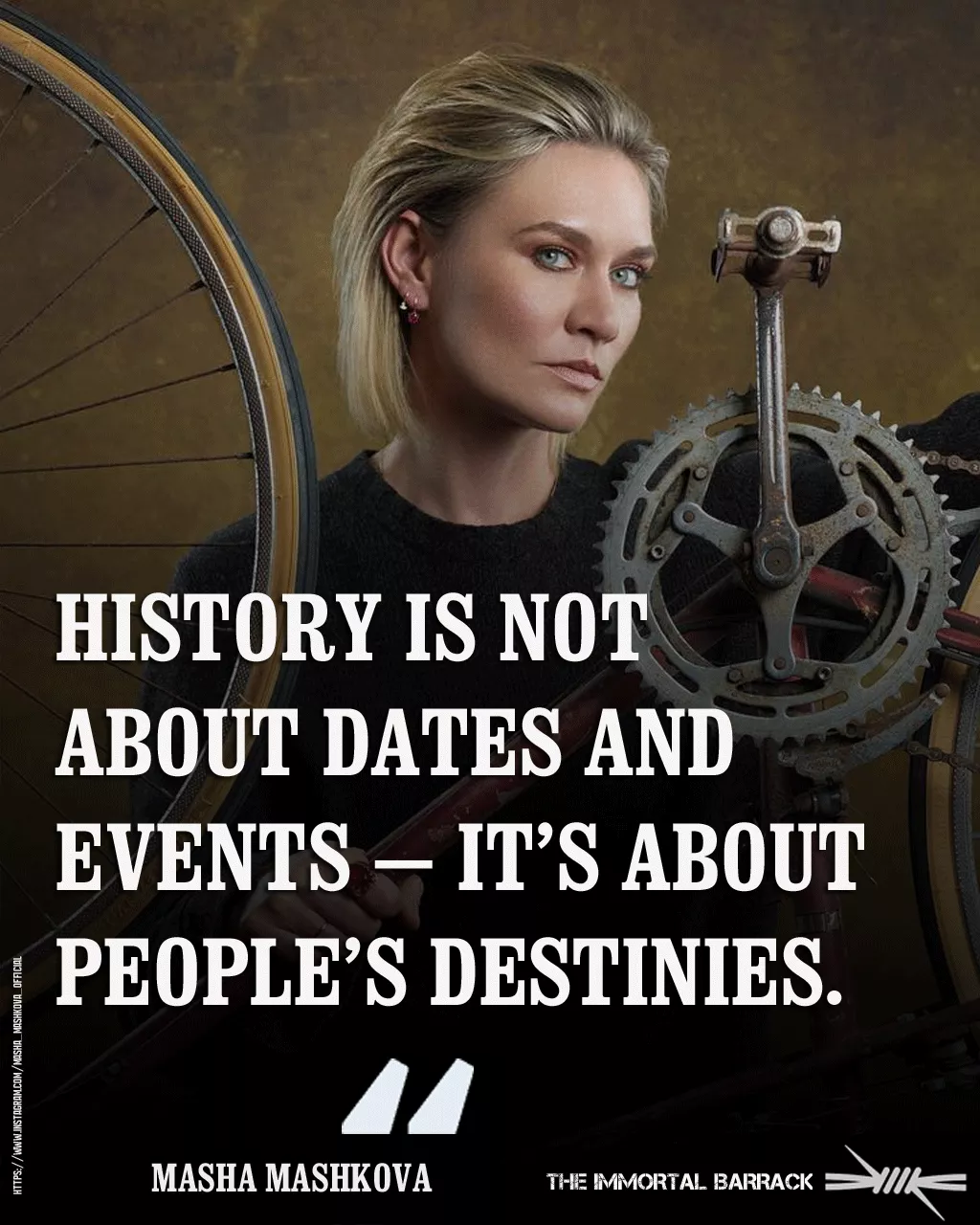
At school we memorized dates and causes, without human meaning.
History was a stressful subject — I understood chemistry better than history.
— When did you first feel that this was yours?
— Probably when I read The Gulag Archipelago.
When I was young, a friend of mine used to read it on the subway while I was reading Sorokin.
She said: “You can’t imagine what they did to people in there.”
At that time, the book scared me — it seemed too heavy, too long, too hopeless.
But about ten years later, I finally read it — and was deeply shaken.
In 2011, we were filming the TV series The Forgotten for Channel One.
There was a storyline about a girl abused by her high-ranking relative.
While preparing for that role, I read Yevgenia Ginzburg’s Journey into the Whirlwind.
It made a tremendous impression on me.
— And did the play Nadezhdiny grow out of that inner work?
— Yes. It became part of my family, part of my own story.
We recently made a video version — it’s on YouTube, free to watch.
I’m very proud of it.
— How do you talk about all this with your children now?
— They’re teenagers — 13 and 15. Of course, we talk.
Recently my younger daughter burst into tears: “I’m a Russian girl, but I’m losing my language.”
It’s hard to explain that when you live abroad.
Until 2022, we spent every summer in Russia — the kids went to camps, to Russian kindergartens.
I try to speak simply, to show them examples — like the singer NaokaThe StopTime Case — a series of administrative proceedings held from October 16 to October 30, 2025, under Part 1 of Article 20.2.2 of the Russian Code of Administrative Offenses (“Organization of mass simultaneous presence and/or movement of citizens in public places leading to a disturbance of public order”) against Diana Loginova, Alexander Orlov, and Vladislav Leontyev, members of the St. Petersburg street music group StopTime. The charges were connected to their participation in improvised street concerts, including performances near the Ploshchad Vosstaniya metro station, where they played songs by artists labeled by the authorities as “foreign agents.” On October 16, 2025, the band’s lead singer, Diana Loginova (stage name Naoko), was arrested and sentenced to 13 days of administrative detention for performing a song by Noize MC. Other members of the group were also detained and sentenced to 12–13 days each. The events sparked wide public reaction and were covered both by pro-government and opposition media, becoming a subject of debate around freedom of artistic expression and the tightening of censorship in contemporary Russia. On October 29, the musicians received another 13 days of detention., who’s only eighteen and already facing criminal charges.
My younger daughter loves Zemfira.
It’s hard for them to understand how a state can arrest someone over a song.
— I want to ask something that will become a common question for everyone we’ll talk to soon.
What does lustration mean to you? Does that word scare you?
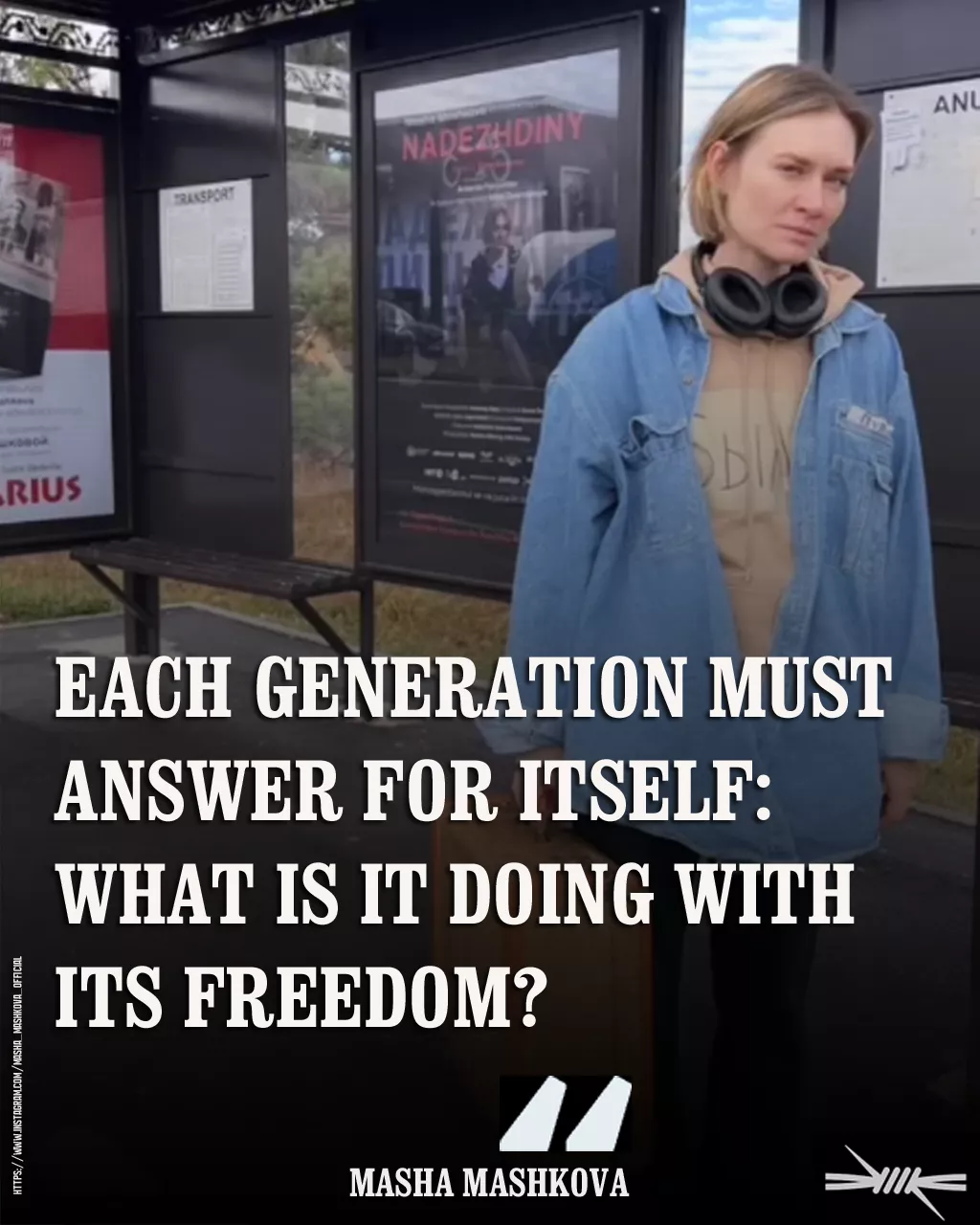
— No, it doesn’t. For me, lustration is a synonym for justice.
Although that word also touches part of my personal story — one I don’t want to speak about aloud.
If it ever happens in Russia, some of my relatives could well find themselves in court — for propaganda.
One part of me wants justice, wants political prisoners freed and rehabilitated, wants the villains held accountable.
And another part — is simply a daughter who loves her father.
— It’s important to understand: lustration doesn’t carry criminal punishment.
It’s not a trial — it’s a limitation of rights: you can’t be elected, you can’t head state institutions.
It’s needed not for revenge, but for cleansing and accountability.
I’ve been reading the draft laws by Galina Starovoitova and Lyudmila Alexeyeva — they understood that this law isn’t about punishment in the future, but about trust here and now.
— Honestly, I always thought lustration was connected to criminal punishment.
You’ve just given me a civic education lesson.
— Let’s call it that — a lesson in justice through conversation. The main thing is that in the future, everyone understands the rules we live by.
— I wish you strength. And I truly hope it all works out.
— Maria, today is October 30, 2025. How do you see Russia five years from now? Do you expect change?
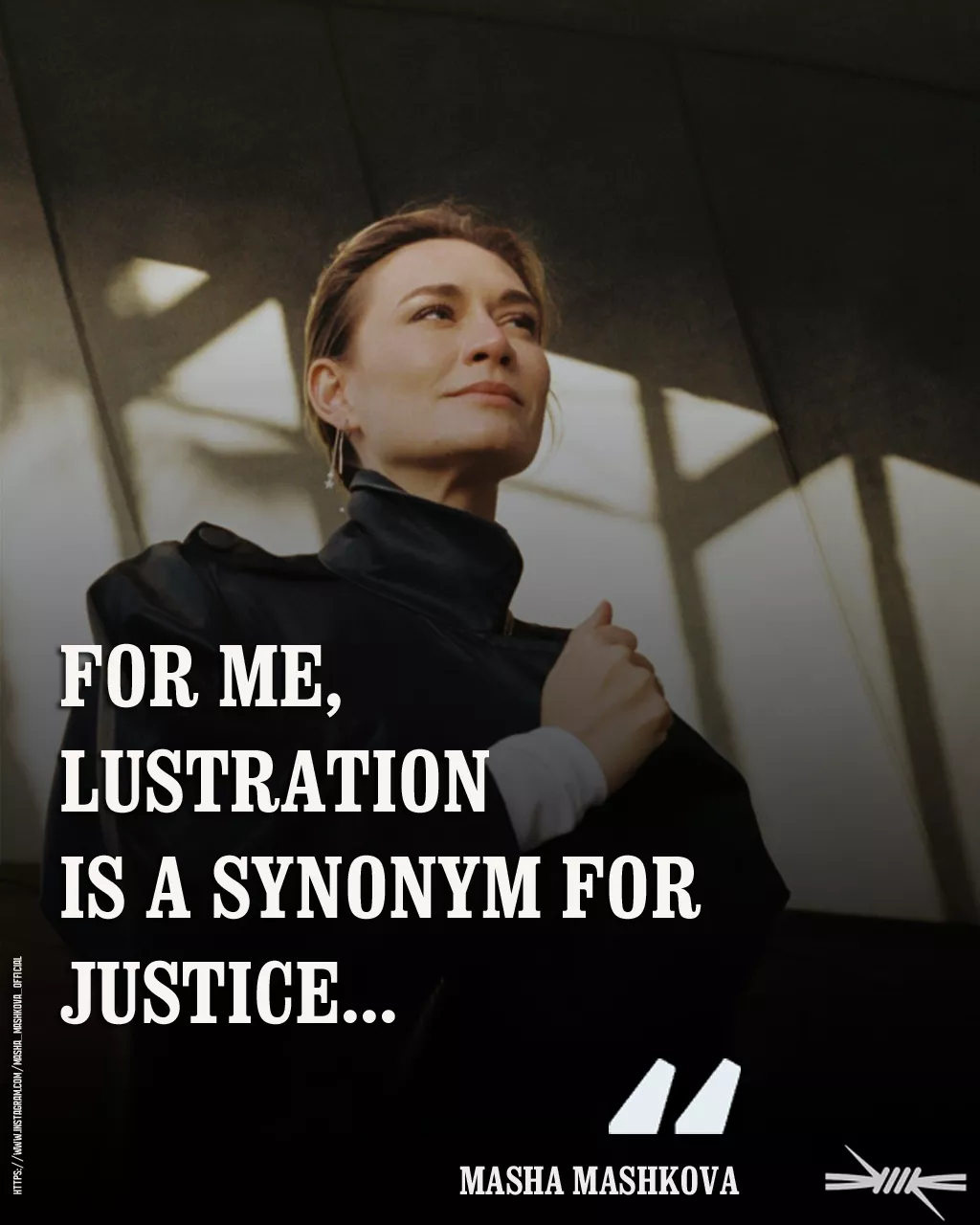
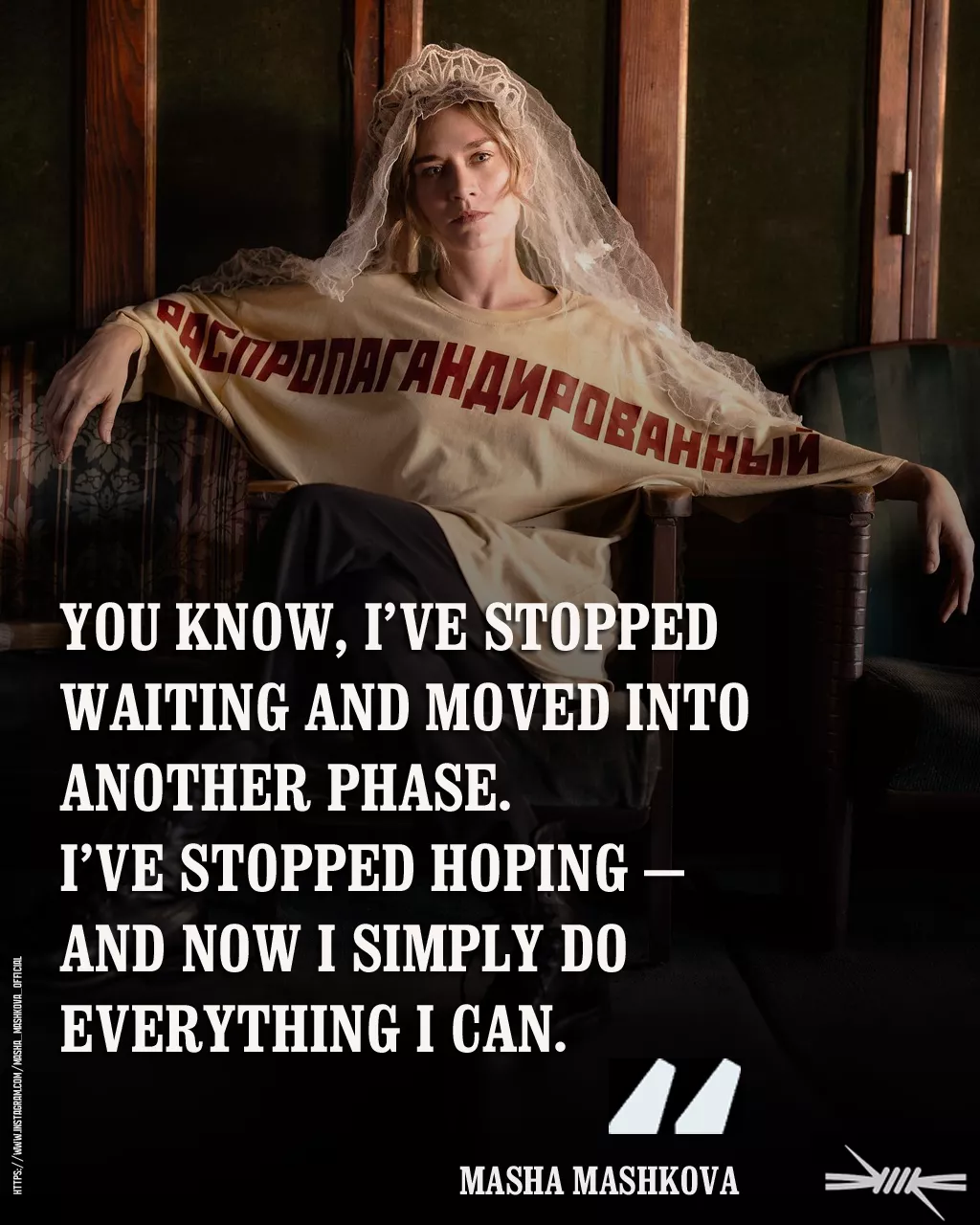
— You know, I’ve stopped waiting. I’ve moved into another phase.
I’ve stopped hoping — and I just do everything I can.
I try to keep my profession, to make projects that have meaning.
Before 2022, I rarely thought about what my roles were actually saying.
Now it’s crucial for me — what I speak from the stage.
I’m proud of the play The Tallest TreesThe Only Tallest Trees on Earth is the first collaboration between actresses Chulpan Khamatova, Maria Mashkova, and musician Vasily Zorky with one of Europe’s most acclaimed playwrights, whose works have been translated into more than 30 languages and staged in dozens of theaters around the world. The play’s genre is absurdist comedy. on Earth by Ivan Vyrypaev — for its meaning, for its honesty.
— That’s also a kind of path — meaning instead of waiting.
— Yes. I just want people who found themselves in exile not to lose their minds — from grief or from daily struggle.
It’s hard too, even if it’s not prison. I want them to remember why they live.
When we performed Nadezhdiny, people cried — and I wanted them to be able to laugh through their tears.
I reread Dovlatov — his short novel The Foreign Woman helped me stop waiting and start living.
— You’re talking about dreams... But for many of us, the dream seems to have vanished. Do you still have one?
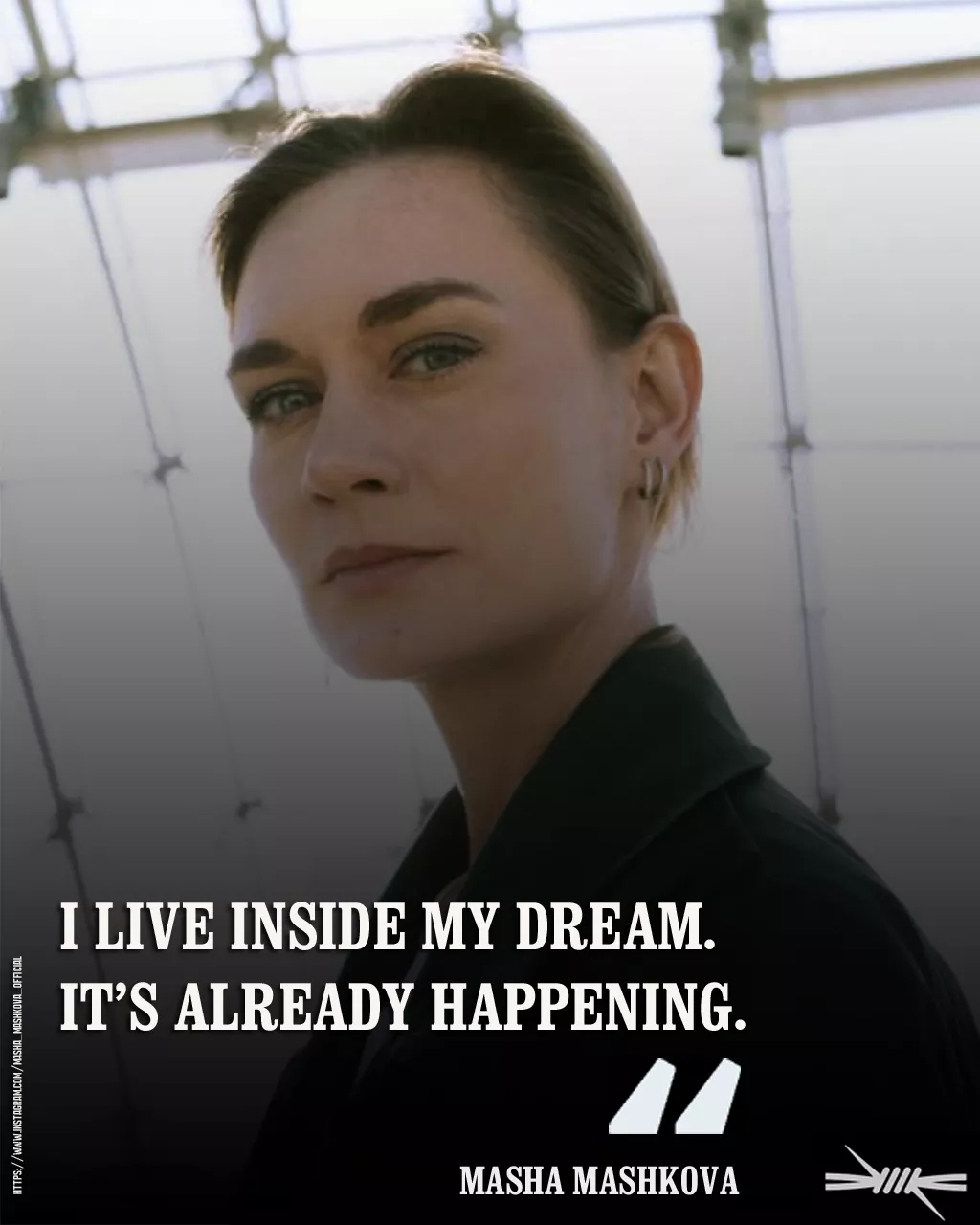
— I recently realized that I’m living inside my dream.
I work with people I once could only dream of — with Chulpan Khamatova, with Vyrypaev.
My family is with me, we live by the ocean. That’s the dream.
Andrei Shalaev:
The main thing is to notice in time when a dream has already come true.
I wandered lost for a long time before realizing I didn’t have one — it had come true, and in its place was a black hole.
Now I have two: a public one — to create a platform for the future laws of Russia,
and a personal one — the kind you don’t talk about.
Each of us should check: do you have a dream, and is it a real one — or a false one?
— A wonderful task — to have two dreams: one public and one personal.
Andrei Shalaev: Yesterday The Immortal Barrack turned ten.
Today is October 30. We remember everyone — those who were, and those who still are.
My grandfather died in captivity in 1941 near Osterheide, and I’ve finally found his grave.
Now I’ll place a cenotaph there — a real, official one.
Maria Mashkova: I really like your life. It’s not ending — it’s simply beginning a new chapter.
You’re doing everything right.
And I’m glad you left.
It seems you didn’t really have a third option.
(What followed was a more private part of the conversation — about the hardships of emigration, the feeling of confinement, human breakdowns, and forgiveness. As promised, we leave it off the record — in the “black box.”)
— On that note, we’ll wrap up. Thank you for your openness, for your time, for the conversation.
Maria Mashkova: Thank you. Sending a hug. And see you at the performances.
Tickets: afisha.md
October 30, 2025.
The Immortal Barrack.
Conversation recorded by Andrew Schalaew
