Valeria RatnikovaValeria Yevgenyevna Ratnikova (born April 27, 1999, in Moscow) is a correspondent and journalist, and a host at the independent news channel Dozhd (TV Rain). represents a new face of a generation unafraid to ask the questions each of us is afraid to answer.
We spoke about memory — family, personal, and collective, the very memory from which a country is built.
Because a new era is already palpable. It doesn’t arrive with slogans — it appears in voices like hers.
As always, the text is available in three languages.
Andrey Shalaew: Good afternoon, and thank you very much for agreeing to talk. We have already received a number of refusals, even though the interview with Maria Mashkova was well-received. Some people simply are not ready to speak about the victims of state terror or about lustration. But it was important for me to hear the view of a journalist — specifically a young journalist who will clearly witness the end of this era. A journalist who — I don’t know whether you feel like a victim of state terror or not — but in fact is one, whether we want to admit it or not.
So I wanted to ask: were there persecuted or repressed relatives in your family, or anyone who faced political pressure?
Valeria Ratnikova: Hello. Yes, I did think about your questions. In fact, this subject was never openly discussed in our family — to my regret.
For example, my great-grandfather, who fought through the entire war, had relatives in Kyiv. They were killed by the Nazis during the Second World War. And this is a story I learned only recently from my relatives — with surprise: I hadn’t realized it was like that. Essentially, his entire family was killed while he was at the front, and there was nowhere for him to return to.
But from the terror of the state — the Russian… well, Soviet, to be precise — my immediate family did not suffer. I mean the closest circle. Of course, there must have been conversations around us, but our close relatives were not affected directly.
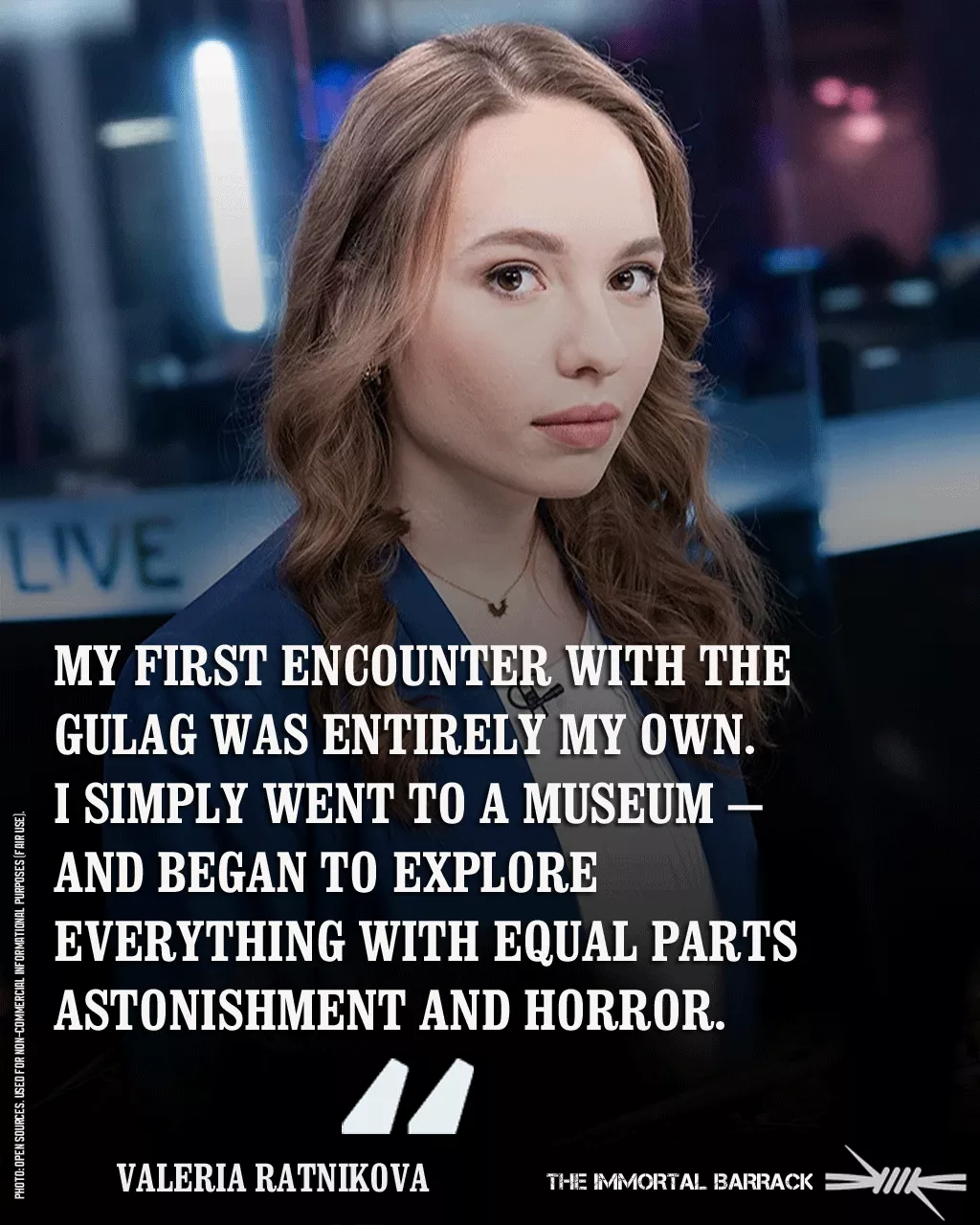
And, in general, my first real encounter with this subject — with the Gulag and political repression in the Soviet era as a whole — began entirely on my own. I simply started taking an interest in politics. I learned that there was a Gulag Museum in Moscow. I must have been around sixteen when I found out about it. I went on a tour, began reading about it — with great surprise and a sense of horror. I absorbed it all by myself.
— So for you that would be around 2016–2017, your final years of school. Which means you studied history already under the full Putin-era curriculum. Because I finished school in 2005, and I still caught some teachers who worked with the old program. Did you study any of this in school at all? Did anything stay with you?
— Well, in school the situation was… We actually had a good history teacher, to be fair. She wasn’t a propagandist; on the contrary, as far as I remember, she spoke about everything quite reasonably. But the problem was different — partly because of the Unified State Exam and everything around it. In the eleventh grade we were supposed to cover the entire Soviet period: not only the early years but also the Stalin era, the Second World War — the Great Patriotic War — and everything that followed. And all of this largely fell on the eleventh grade, when no one had the time or focus for it anymore. Everyone was preparing for their own exam subjects.
I, of course, put all my energy into literature because I was applying to the journalism faculty and competing in the literature olympiad. And naturally, when you study literature, you encounter history directly — through context. So for me there was some overlap, but mostly through tutors. At school… yes, the topic was mentioned — and, of course, not in a positive light; as I said, we had a sensible teacher. But in terms of studying it in detail, to the point where it would really stay with you, I don’t recall that happening.
— And in university, once you were already studying journalism — did they talk about it there?
— Yes, we also had history courses there. And naturally, it came up through the study of Russian literature and through journalism lectures. I think it was discussed much more extensively.
But again, any understanding I have of the repressions — and I still feel I don’t know nearly enough — I gained on my own. I read books, visited museums. For example, when I lived in Riga, I went to the Museum of the Occupation several times. It’s extremely dense in terms of information. If you try to read everything, you’re lucky to make it halfway through in a single visit — if that. I think I ended up going four times: first on my own, and then taking relatives who came to visit. And it’s very well designed — technologically, with installations; the way the information is presented — light, sound, text — is genuinely engaging.
For me, there was a lot that was new there, to put it mildly. Not only because it tells the story of Latvia in detail, which I had never studied deeply. But also because, in the context of Stalinist repressions, I learned many things I simply hadn’t known. Even small details: how it actually worked, how the camp uniforms looked, how people wore them — all of that was new and fascinating to me. And about the deportations — how people were deported.
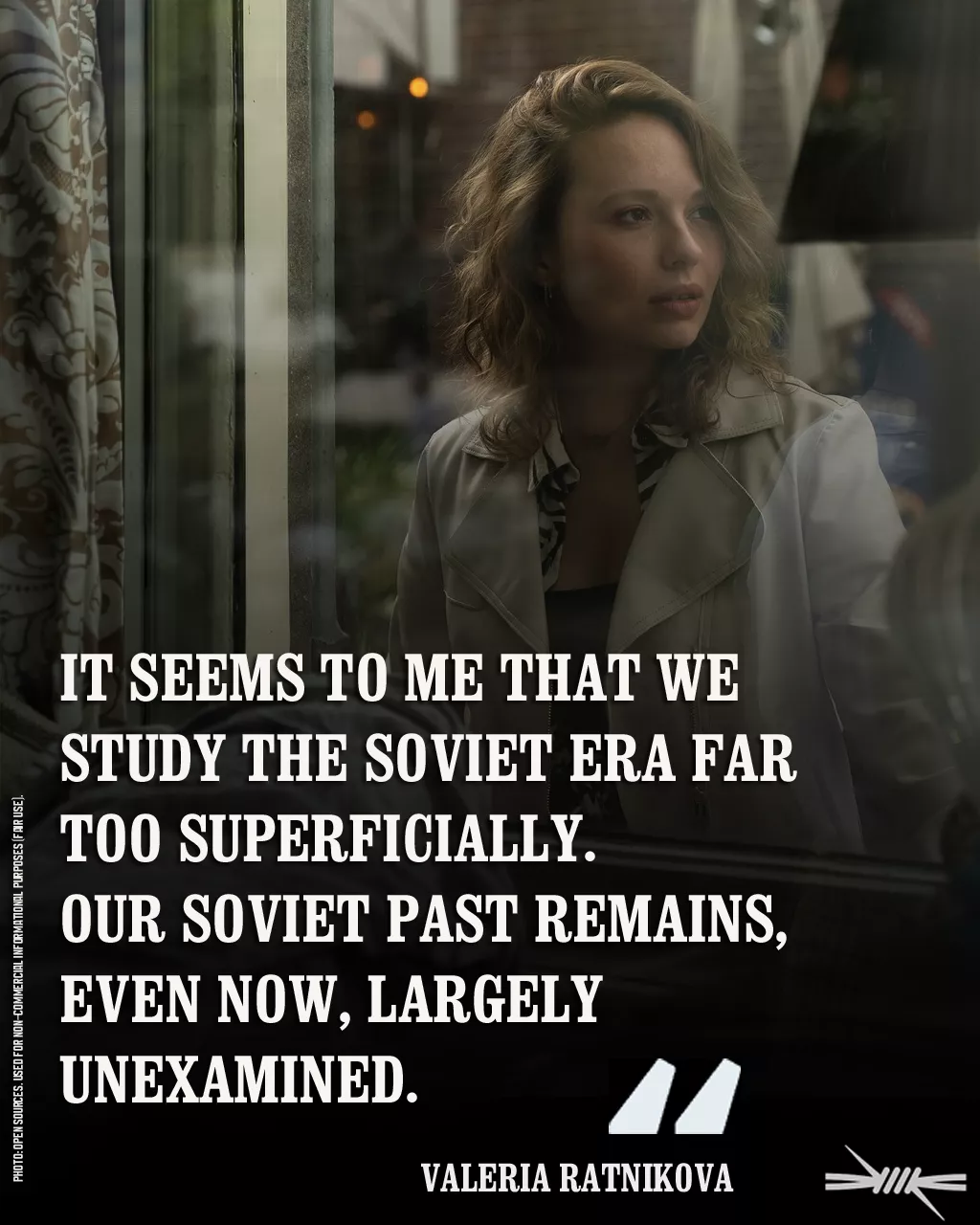
Of course, I had heard about all of this, I knew about it, but I think both at school and at university the subject is taught very superficially. We should be devoting much more time in school and university curricula to the study of recent history — the Soviet period. I think it’s far more important than knowing the fifteenth or sixteenth century in fine detail. That’s important too, of course, but our modern life is shaped much more directly by the Soviet experience. And that experience, in my view, remains largely unprocessed. Even in the textbooks from my time, this simply wasn’t happening.
— I remember something similar when I was at university… although mine was very specific — the Ryazan Airborne School.
— Oh my God.
— And there was a hallway with portraits of the school’s commanders. I looked at the plaques and wondered: why are the early commanders missing? All the portraits were postwar, even though the school dates back to 1917. And when I later began studying state terror, it turned out that the first seven commanders of the Airborne School had been executed. That’s why there were no photographs. An interesting detail as well.
So let’s move on to the main topic. All of us lived through this transitional period for a while… even you, I think, caught at least a small part of it. I remember the nineties only vaguely, but I remember very clearly the smell of freedom — something that has long since disappeared in Russia.
But I still feel that we left something unfinished. There was never an effort to pass a lustration bill. The last attempts were made by Starovoitova.
What does the word “lustration” mean to you?
— Well, to be honest, there’s a real risk here for a non-professional to get things wrong and say something legally ill-considered. We’re speaking as laypeople, not as lawyers. For me, as someone who hasn’t studied this topic professionally, lustration is, let’s say, a process in which people receive what they deserve.
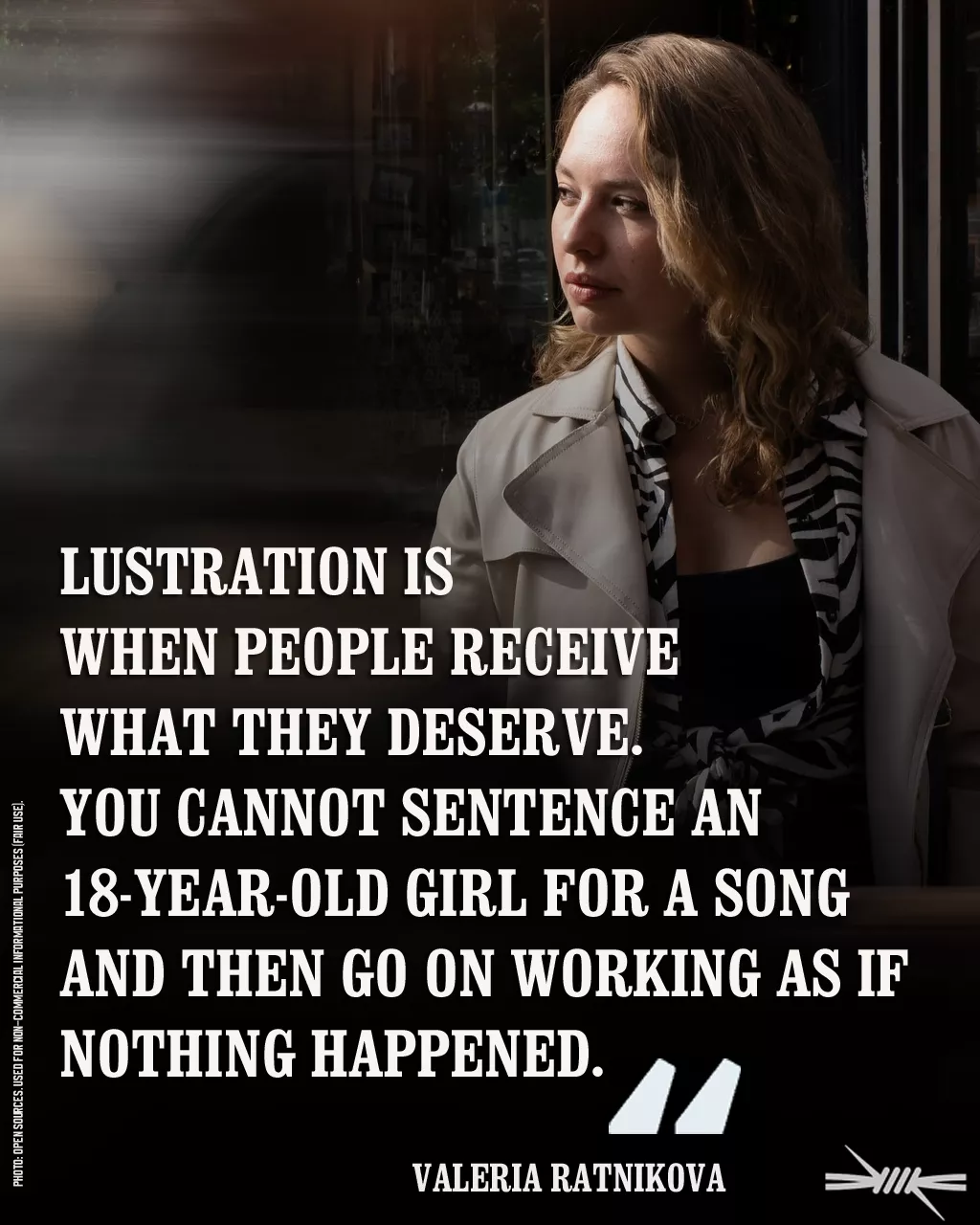
So, for example, it’s difficult for me to imagine that the same judge who gave the singer Naoko in St. Petersburg thirteen days in custody for performing a song — you know the recent case — would then calmly continue working after a transition to a more democratic Russia.
Each time I see these people’s faces, their eyes, I’m struck. I often think about what is happening in their minds and why they behave the way they do. Especially in cases that are utterly absurd: an eighteen-year-old girl, thirteen days for a song. And to me it would be strange if this judge continued to work as if nothing had happened once the regime changes — considering she already has decisions like this behind her. I don’t know whether this was the only high-profile case she handled or whether there were others, but the point is that she has already violated the law, violated the Constitution, and professionally — to put it bluntly — betrayed her profession.
To me, lustration is about this: ensuring that those who, in their professional roles, effectively betrayed their profession by complying with the demands of a repressive regime face consequences for it. Of course, we can discuss whether they had a choice — but still. There must be some sort of penalty or at least a limitation. Otherwise, how can they continue to work as if everything is fine?
For me, this applies primarily to judges, police officers, prosecutors — the security apparatus and the judiciary. If we speak about teachers who engaged in propaganda, that becomes more complicated. I don’t have a definitive answer. I would defer to people more knowledgeable in the field. Because with judges, everything is concrete: a signature, a name, a ruling — it is very clear where a person violated the law. With teachers, it is far less clear how to prove this with full certainty and in which specific cases.
That’s how I would begin to answer. Because lustration, to me, is primarily about limiting access to power.
— Yes, so that there is a way to ensure turnover for some period of time. I’ve also been thinking about this: people always talked about lustration, but they never considered it as a way to unite the other side — not the side that would be lustrated, but as a filter for those who can even now speak seriously about the future. Our community, especially abroad, is overflowing with people, and we cannot find a common language. It seems to me that a lustration law would separate many and make clear who, in the event of the regime’s collapse, could realistically claim a place in shaping the future.
Does a young journalist — a “terrorist,” as they now say (or are you not yet officially a terrorist)? An “extremist,” a foreign agent — do you have a dream?
— Well, “extremist” — you can say that, yes. They’re adding everyone to a single registry now.
— Yes. And you were designated a foreign agent right at the moment I fled Russia — almost simultaneously, at the end of 2023.
— Yes, it happened on December 23, if I’m not mistaken — right before New Year’s. Honestly, all these labels… my reaction to them has already dulled. The first blow, of course, was “foreign agent.” You realize that they have pointed a spotlight at you — very personally. Although now, who isn’t a foreign agent? Almost everyone. But even so, it was a clear signal: they are watching you specifically, and watching closely.
What was surprising was how the criminal case itself unfolded. When nothing happens for a long time — even though posts about Bucha, for example, which, as far as I understand, are also mentioned in my case materials (I still don’t have full access to them; my lawyer can’t obtain them) — all of that was written back in 2022, yet it took them two years to act. But one way or another, sooner or later, I will see those materials. And of course it’s an extremely unpleasant feeling — having a case opened against you for “spreading fakes about the army.” It’s frightening on the one hand, and on the other — strangely — it gives you even more motivation to work. You start to feel that when all of this is over, everyone will “receive what they deserve.”
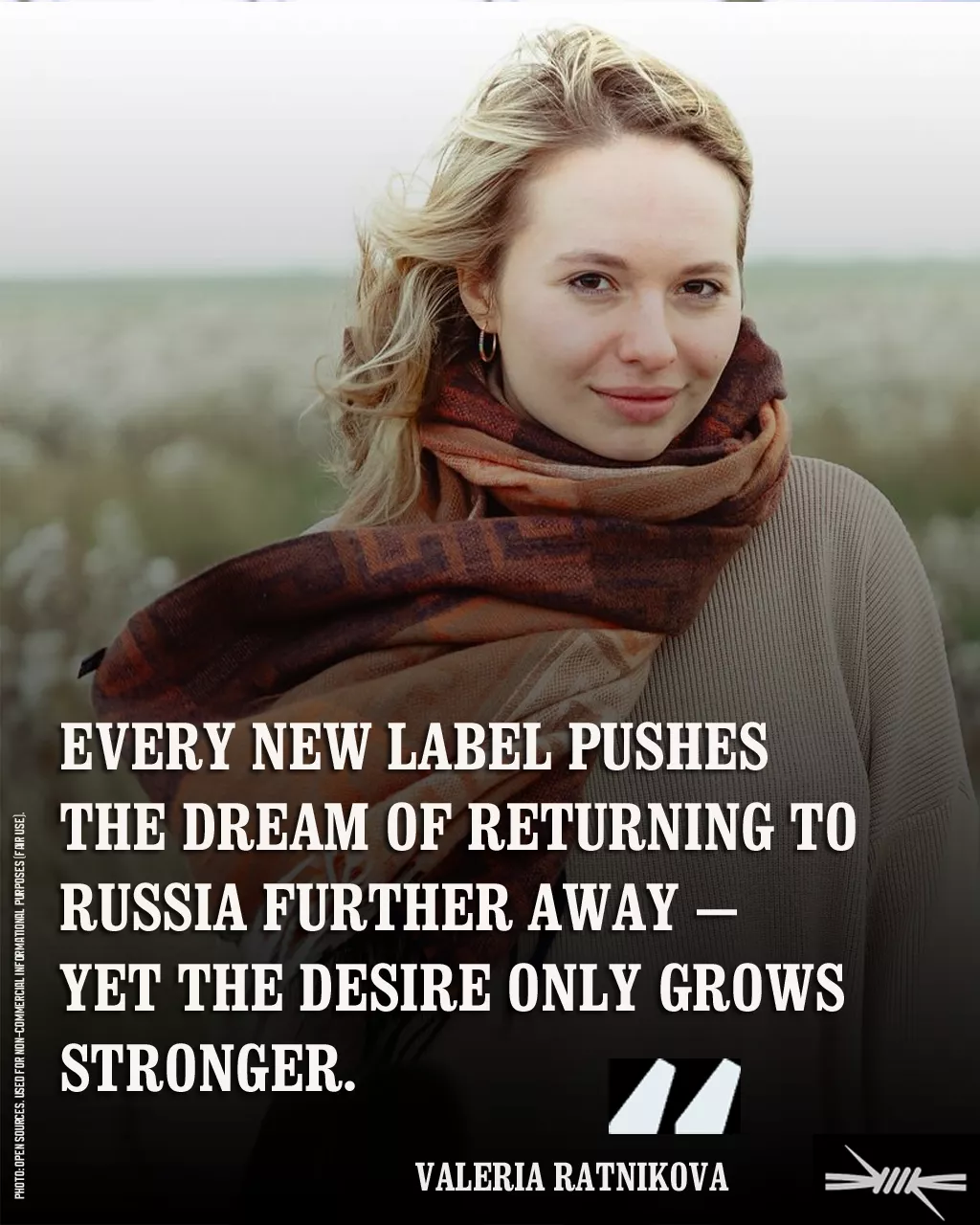
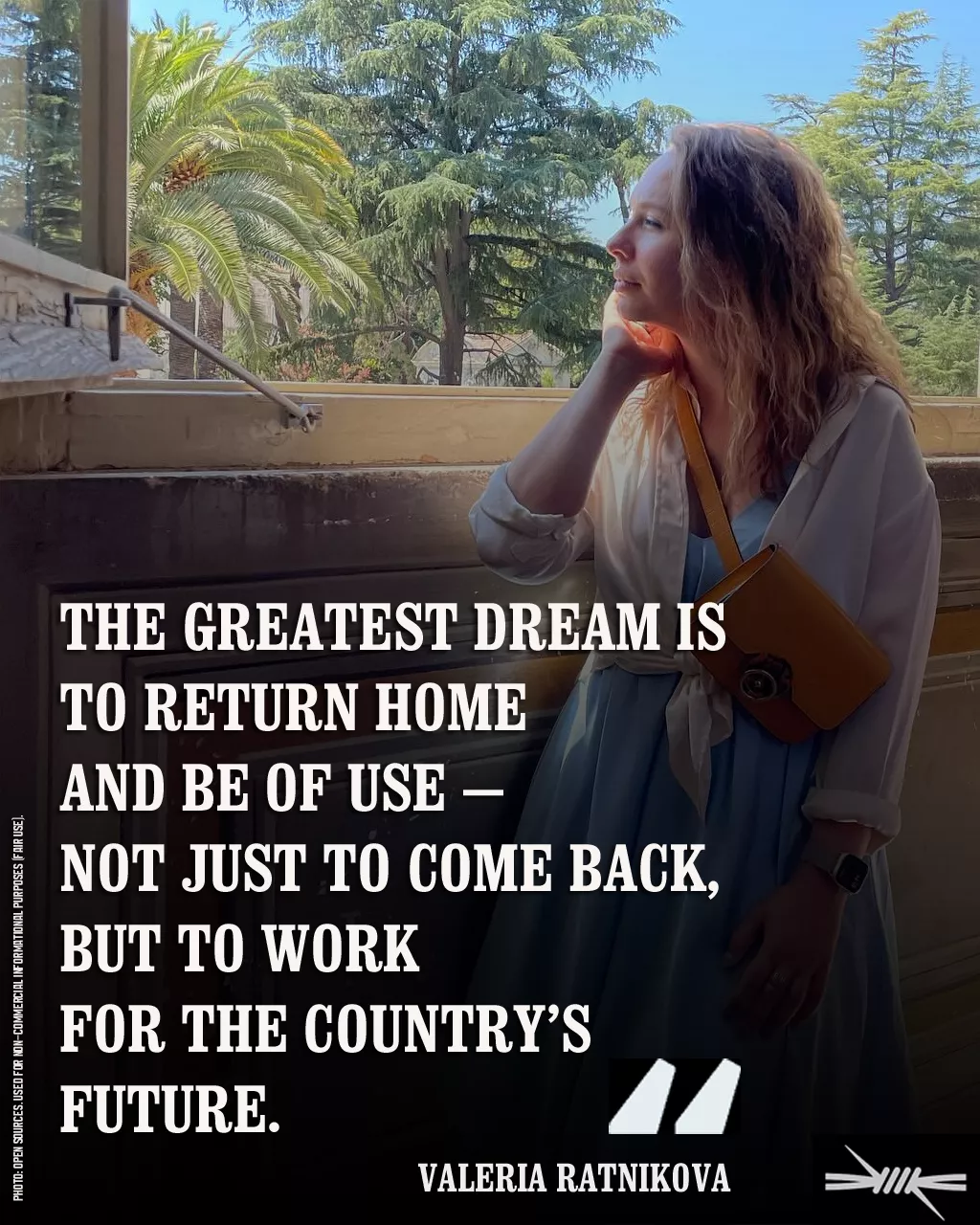
My biggest long-term dream is to be able to return to Russia. Truly, it’s the greatest dream I have, precisely because it now feels completely unattainable. With every year — with every new label, every new status attached to me or to the channel I work for — this dream moves further away, but the desire only grows. Every emigrant dreams the same dream. But for me it isn’t just a dream at night. I think about it constantly. And the dream isn’t just to physically go back — it’s to be able to influence what happens, to be useful there, on the ground. To report, to help, to do the work that will be needed.
— A couple of books and a couple of films you would recommend — about history, war, repression, anything. Just a few books and films.
— Oh, that’s something you really need to prepare for. I’m not sure I can fit it into “a couple,” but… At one point I read Yevgenia Albats’s book on the KGB (I need to recall the exact title). It was a very important book for me. I read it in detail, learned a great deal — was, to put it mildly, stunned — and came to a kind of new understanding.
— There’s something about Colonel Khvat in it, right?
— Yes, exactly.
As for films… I think I won’t recommend a film, but a stage production. I saw a play based on a book by Sasha Filipenko. I didn’t manage to read the book itself, unfortunately, but I would definitely recommend the production.
It came to Amsterdam, where I was at the time. It’s a very powerful work, because it tells the story of a person returning to the Soviet Union, and what happens to him afterward. And about how seductive the idea of going back can seem.
When I watched it in the theater, it gave me chills. Because you often think: “It would be so nice to just go back.” At that point I still didn’t have a criminal case, and I would wonder: maybe it would be possible to peek in, to take a short trip. Of course, you push those thoughts away because you understand the situation. But the temptation is still there, and I understand why. In that sense it’s a very telling piece.
— No, I’m over it. I don’t want to. I don’t want to go anywhere. I’ll stay here. I went and wrote a long letter — three long articles in German — and submitted them to the local regional newspaper. Now I’m waiting for a response — I’ll work and study here. But what else can you do? You have to do something anyway. For me it matters that, somehow, things can still be reconciled.
— Maybe that’s how it works. Maybe it won’t. It’s hard for me to “let go” for now. My feelings for Russia are still too strong. Not for the state, but simply on a human level — for the people, for those who stayed behind, for my home, for everything. I didn’t leave “well.” I left on March 2 in a fairly panicked state. I packed in two hours. It wasn’t systematic or planned in any way. That day there was a threat that security forces could come to TV Rain. There were threatening calls to the office. No one understood what would happen — whether there would be a search, arrests — everything was extremely uncertain. The feeling that they could come the next day was very strong.
— All these labels and prosecutions. Do you consider yourself a victim of state terror?
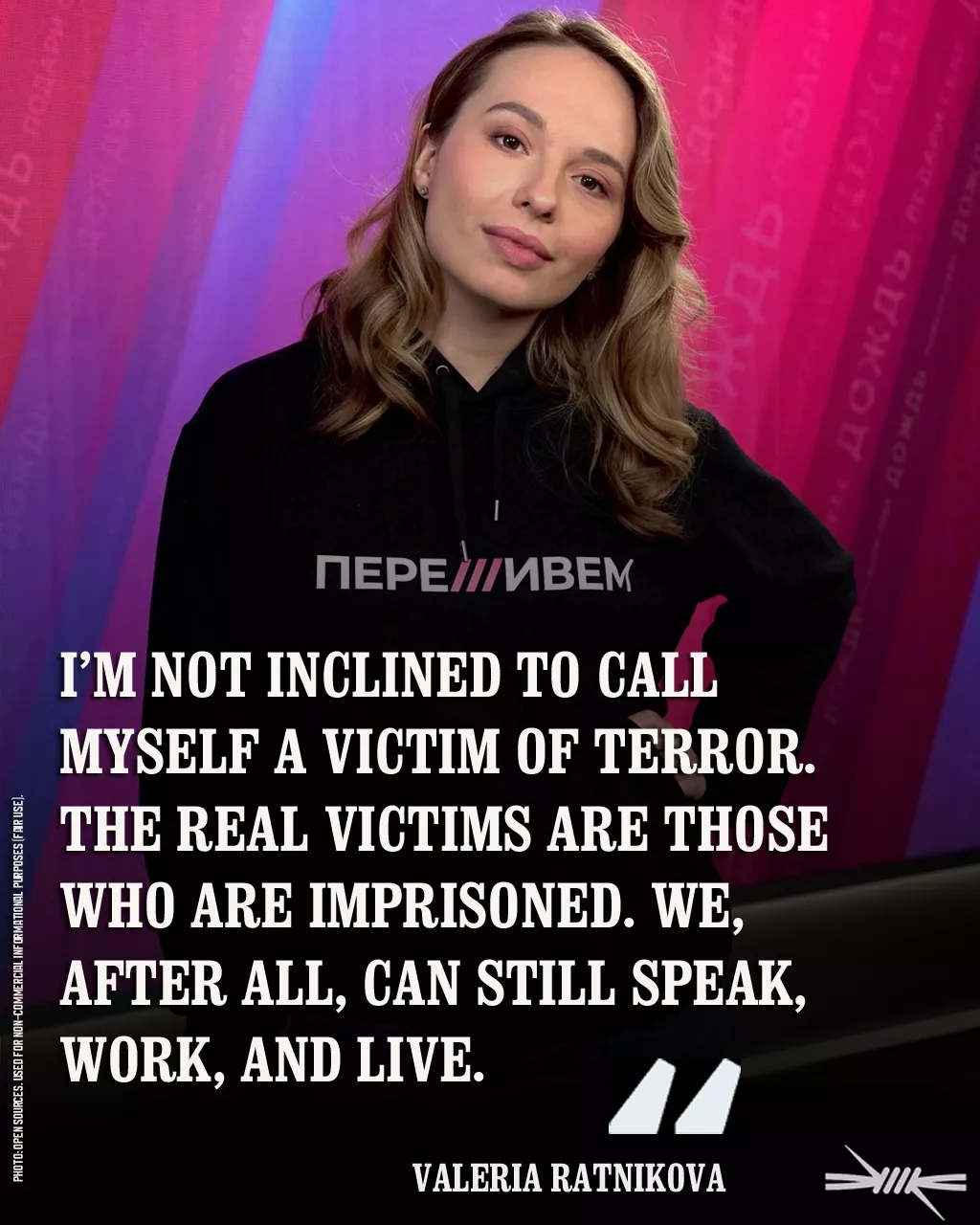
— We don’t really… well, when you say “a victim of terror,” I don’t tend to think of myself that way. Yes, I understand that if I ever return, there might someday be some form of compensation from the state for what we went through — if such a mechanism ever appears. But in reality, those who truly suffered are the ones who were imprisoned, the ones who are in jail now. We, rather, can only be grateful that we weren’t affected in that way. Although, of course, there are consequences: restrictions, countries you can’t travel to, the need to be careful; you do feel them “reaching out,” wanting to reach you.
Still, it’s difficult to fully identify yourself with people from earlier eras who went through similar experiences — or with those who are serving sentences today.
— No, well, I’ve drawn my own conclusions from history, and it seems to me that those who left made the right choice. And I don’t want to do anything for today’s Russia anymore. For the future Russia — yes. But for today’s — I don’t. Thank you very much for your time. My respects. All the best.
— All right, we’ll stay in touch. Thank you for inviting me. Goodbye.
November 2025
The Immortal Barrack
Interview recorded and transcribed by Andrey Shalaew